What Is Botox?
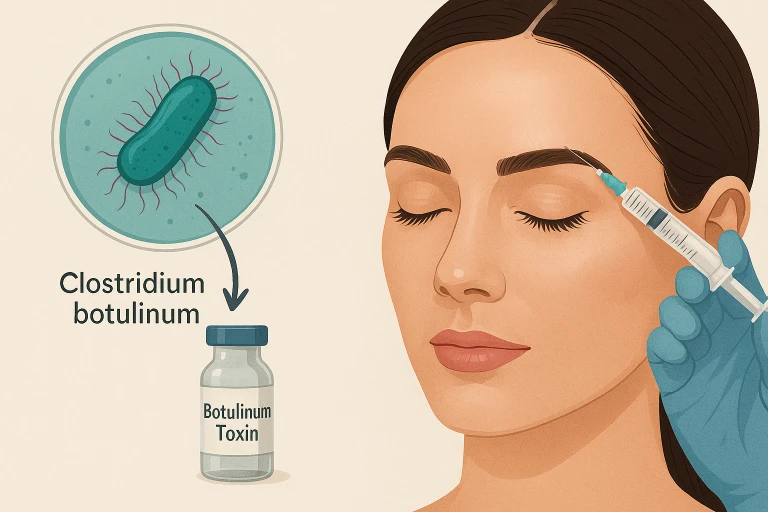
Botox is the commercial name of a pharmaceutical product containing Botulinum Toxin Type A. This toxin is derived from a bacterium called Clostridium botulinum. Although botulinum toxin is considered one of the most potent natural toxins known, when used in extremely low and controlled doses, it has remarkable therapeutic and aesthetic applications.
Clostridium botulinum is an anaerobic bacterium, meaning it grows only in the absence of oxygen and is destroyed in oxygen-rich environments. It is commonly found in soil and improperly sterilized canned foods. This bacterium produces botulinum toxin, which disrupts muscle function by inhibiting the release of neurotransmitters. If the toxin spreads systemically, it can cause the serious and potentially fatal disease botulism.
History and Development of Botox
The discovery and development of Botox is of great scientific interest, as it represents the transformation of a deadly toxin into one of the most widely used medical and aesthetic drugs worldwide.
Early Signs: A Mysterious Illness from Sausage
In the late 18th and early 19th centuries, German physicians encountered cases of food poisoning characterized by muscle weakness, paralysis, blurred vision, and sometimes death. Most cases occurred after consuming processed or smoked sausages, which led to the term “sausage poisoning.”
1820 – Justinus Kerner’s Scientific Discovery
Justinus Kerner, a German physician and poet, was the first to study the phenomenon scientifically. He:
-
Investigated over 200 cases of food poisoning
-
Identified a deadly toxin produced during meat spoilage
-
Named it Wurstgift (“sausage poison”)
-
Demonstrated its effect on neuromuscular transmission
-
Remarkably suggested its potential therapeutic use for muscle spasms
Kerner is widely regarded as the founder of the concept of therapeutic botulinum toxin.
1895 – Identification of the Causative Agent
In Belgium, a food poisoning outbreak caused by spoiled ham led to several deaths. Professor Emile van Ermengem, a Belgian microbiologist, identified the causative bacterium as Clostridium botulinum. This discovery marked the beginning of modern understanding of botulinum toxin as a powerful biological agent.
Modern Medical Development
Botulinum toxin was later refined into a therapeutic pharmaceutical product. The first commercial brand, Botox®, was developed by Allergan (USA).
-
1970s: Dr. Alan B. Scott, an American ophthalmologist, used Botulinum Toxin Type A to treat blepharospasm in animal studies.
-
1980s: The first human treatments for strabismus were conducted, and the FDA approved Botox for strabismus and blepharospasm.
-
1990s: Aesthetic physicians observed that Botox injections reduced facial wrinkles, leading to its widespread use in cosmetic medicine.
Today, botulinum toxin is approved for more than 10 medical and aesthetic indications, including:
-
Chronic migraine
-
Excessive sweating (hyperhidrosis)
-
Muscle spasticity
-
Overactive bladder
-
Multiple cosmetic applications
Pharmaceutical Production Process of Botox
Bacterial Cultivation
Clostridium botulinum is cultured under strict anaerobic laboratory conditions.
Toxin Extraction
After sufficient growth, the botulinum toxin produced in the culture medium is harvested.
Purification
The toxin undergoes highly sensitive purification to remove impurities and non-essential proteins.
Dose Adjustment for Safety
The toxin is carefully formulated to remain effective while ensuring safe use at micro-doses.
Final Formulation
The purified toxin is combined with stabilizers such as human albumin and sodium chloride, then lyophilized (freeze-dried).
Packaging and Sterilization
The product is sealed in sterile vials and stored refrigerated. Prior to injection, physicians reconstitute it with a specific diluent.
Applications of Botox Injections
Aesthetic Applications
-
Reduction of facial wrinkles (forehead, crow’s feet, frown lines)
-
Non-surgical facial lifting
-
Gummy smile correction
-
Jawline slimming (masseter hypertrophy)
-
Chin dimpling correction
-
Nasal tip lift
-
Prevention of new wrinkle formation
Medical Applications
Botox is used across multiple specialties, including neurology, dermatology, urology, gastroenterology, orthopedics, and ophthalmology:
-
Chronic migraine treatment
-
Hyperhidrosis
-
Muscle spasticity and dystonia
-
Strabismus and blepharospasm
-
Overactive bladder
-
Bruxism and jaw pain
Pre-Injection Care
-
Avoid blood-thinning medications 3–5 days prior
-
Avoid alcohol 24 hours before injection
-
Discontinue irritating skincare products
-
Skin must be clean and makeup-free
-
Contraindicated during pregnancy and breastfeeding
-
Inform physician of all medical conditions and medications
Post-Injection Care
-
Avoid lying down for 4 hours
-
Do not massage injection sites
-
Avoid strenuous exercise for 24 hours
-
Avoid heat exposure
-
Avoid alcohol for 24 hours
-
Report symptoms such as eyelid drooping or double vision
Side Effects of Botox
Common and Mild
-
Redness, bruising, swelling
-
Mild headache
-
Tingling or itching
Uncommon and Temporary
-
Eyelid drooping (ptosis)
-
Facial asymmetry
-
Dry or watery eyes
-
Speech or swallowing difficulty (neck injections)
Rare but Serious
-
Muscle weakness beyond injection site
-
Breathing or swallowing difficulty
-
Botulism-like symptoms
Botox is contraindicated in pregnancy and breastfeeding due to insufficient safety data.
Who Is at Higher Risk?
-
Patients on anticoagulants
-
Individuals with neuromuscular disorders
-
Immunocompromised patients
-
Treatments performed by non-medical providers
Preventing Complications
-
Choose qualified physicians
-
Follow pre- and post-care instructions
-
Provide full medical history
-
Seek follow-up if symptoms occur
Summary
Botox has evolved from a lethal toxin into a highly effective and safe medical therapy when used correctly. In recent years, Iran has entered the global Botox manufacturing arena.
Atra Zist Aray, leveraging domestic expertise and advanced technology, has successfully produced Dyston, an Iranian botulinum toxin product. Manufactured in compliance with international standards, Dyston demonstrates high efficacy and is currently exported to multiple countries, marking a significant step toward pharmaceutical self-sufficiency and global competitiveness.



بدون دیدگاه